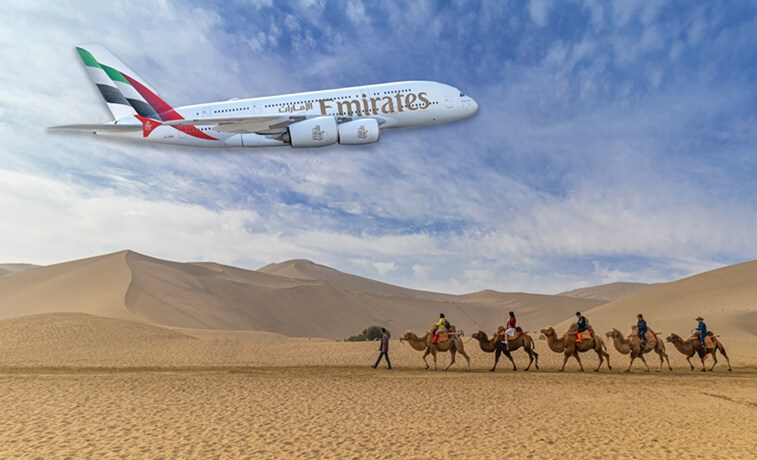

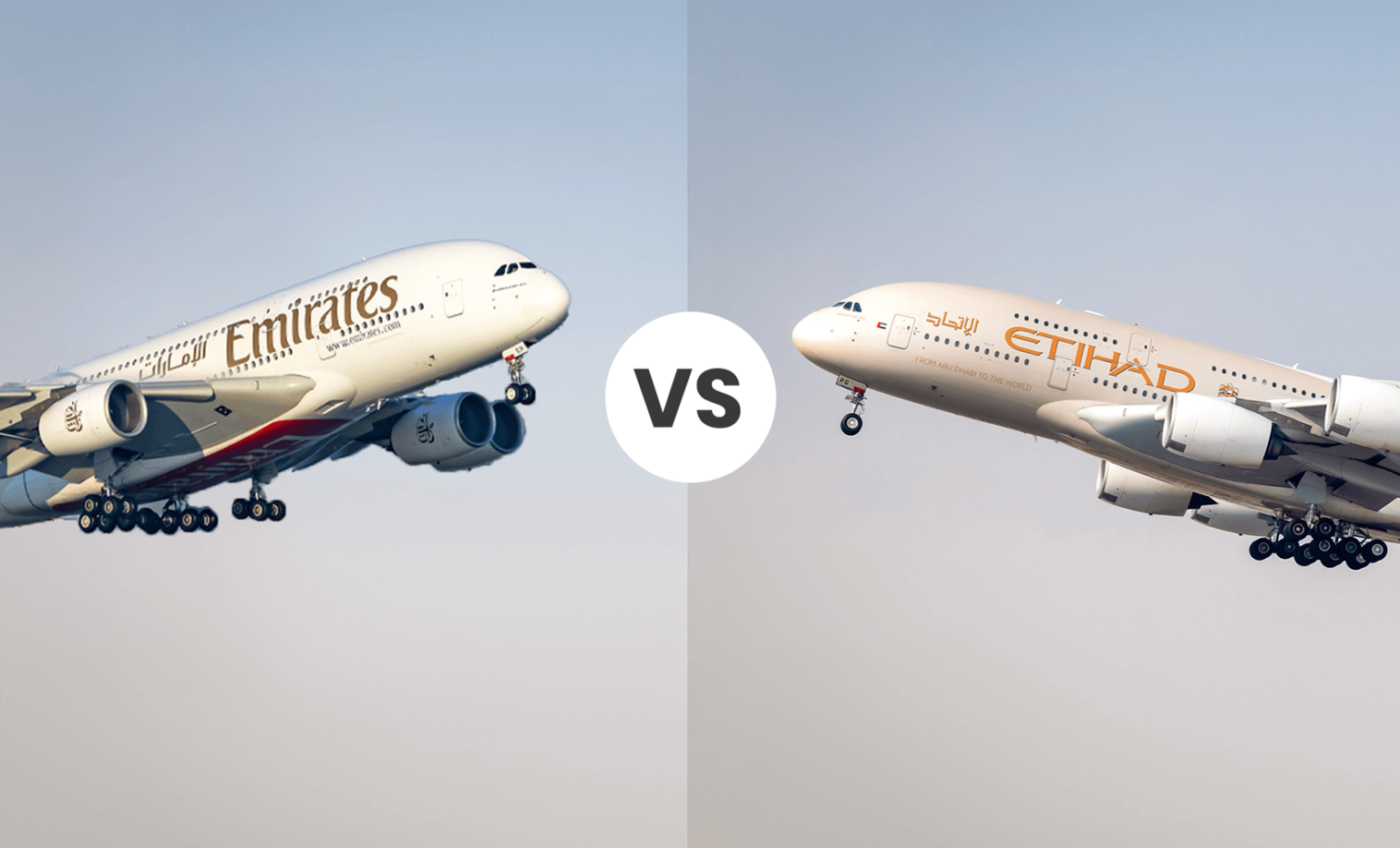
Both Emirates and Etihad are flag carriers of the UAE, but they have certain competitive advantages over each other – which makes them unique in their way. In the high-stakes game of long-haul travel, Emirates and Etihad strive to deliver the best travel experience, irrespective of travel class and itinerary. A big fleet, a bigger network, luxurious cabins, world-class inflight entertainment, bar lounges at 35,000 feet collectively define Emirates, whereas Etihad stands out for flying nanny service, US pre-clearance, and the first-class suite – The Residence.
Emirates or Etihad: Which airline has a bigger US-India network
Emirates Airlines’ direct access to 12 US gateways has the upper hand in competition with Etihad given the fact that Etihad’s US network is half of Emirates’. You can book Emirates flights to Dallas, Houston, San Francisco, and Seattle – which are missing from Etihad’s list of US destinations. On the other hand, direct Etihad service to Atlanta, and Charlotte is a competitive edge over Emirates.
- Emirates’ US Destinations: Boston, Chicago, Dallas, Houston, Los Angeles, Miami, New York (JFK and Newark), Orlando, San Francisco, Seattle, Washington, D.C.
- Emirates’ India Destinations: Ahmedabad, Bengaluru, Chennai, Delhi, Hyderabad, Kochi, Kolkata, Mumbai, and Thiruvananthapuram.
- Etihad US Destinations: Boston, Chicago, New York (JFK), Washington D.C. (IAD), Atlanta, Charlotte (starting in March 2026).
- Etihad India Destinations: Mumbai, Ahmedabad, Delhi, Bengaluru, Chennai, Hyderabad, Kolkata, Kochi, Kozhikode, Jaipur, and Thiruvananthapuram.
Emirates’ Dubai stopover vs Etihad’s Abu Dhabi stopover
Both the Middle East airlines offer stopovers in their hub cities, which you can add to your one-way travel or round trip from USA to India. Their stopover programs are free to some extent. While Emirates’ Dubai stopover is restrictive to layovers of minimum 8 hours for Economy/Premium Economy passengers, and 6+ hours for Business Class guests. Etihad’s Abu Dhabi stopover program includes complimentary hotel accommodation for two nights, irrespective of travel class and fare type. While Emirates’ Dubai Connect package for eligible travelers includes free meals and airport transfers, Etihad does not offer the same in its stopover program.
Any airline’s free stopover program comes with certain limitations. For instance, Emirates’ free stopover program is limited to a layover of maximum 26 hours – which is not enough to experience the best of Dubai. Only customized stopover plans with curated experiences for 2 to 4 days can satisfy your urge to explore Dubai or Abu Dhabi. Check out Indian Eagle’s Dubai Experience packages with luxury and leisure activities at unbeatable rates.
Etihad vs Emirates: Primary advantages
The US CBP pre-clearance facility at Abu Dhabi is Etihad Airways’ primary edge over Emirates for the US-bound passengers. They enter the US as domestic travelers. This is why the US-based Indians turn to IndianEagle.com for best Etihad flight deals for their parents’ hassle-free travel from India to USA via Abu Dhabi.
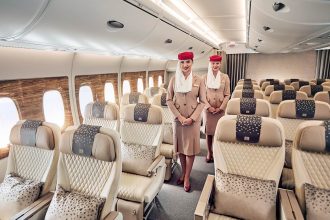
Premium Economy is Emirates’ best advantage in competition with Etihad. Emirates Airlines is the only Middle East carrier to offer award-winning premium economy seats. The UAE’s Dubai-based flag carrier has the best premium economy seats in the world, according to Skytrax Awards which is hailed as the Oscars of aviation.
Emirates or Etihad: Which airline is more family-friendly
Both Emirates and Etihad are family-friendly airlines catering to specific needs of family travelers with young kids in ways unique to their inflight service standards. Be it dietary care or inflight entertainment for children, Emirates Airlines goes the extra mile to ensure parents travel at ease. Organic baby food being available on board makes Emirates flights the first preference of family travelers with kids younger than 2 years. In addition to baby food reheating to bottle-warming service on board, Emirates’ flight attendants provide feeding bottles and milk formula to those not carrying baby food from home.
Etihad is the only airline offering nanny service for infants aboard select flights from USA to India and other destinations. Introduced in 2013, Etihad Airways’ flying nanny service is a special assistance program designed to ensure a comfortable flight for families with young children. The flying nannies are trained in different modules of childcare, child psychology, and how to entertain kids with different behavior types. They are helping hands when it comes to warming up milk bottles, feeding kids, changing their diapers, reading out to them, and lulling them into sleep.
Emirates vs Etihad: Business Class travel
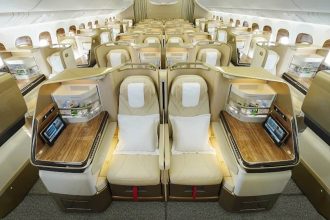
Both airlines deliver more or less the same business class travel experience from USA to India; however, Emirates’ business class is a notch above Etihad’s in terms of unique facilities on board. Emirates owns the largest fleet of superjumbo A380s with spacious business class cabins. Precisely, Emirates’ A380 business class is known for inflight bars where guest can socialize over an exclusive selection of wines and champagnes.
Emirates operates a larger flagship lounge network for its premium guests, including business class flyers than Etihad Airways. Rated highly by Skytrax Awards, Emirates’ lounges at Dubai DXB Airport offer livelier premium space than Etihad lounges at Abu Dhabi Zayed International Airport, according to various passenger survey reports.
Etihad vs Emirates: Passenger safety
Inflight comfort and passenger safety equally matter during long-haul intercontinental travel. The list of 10 safest airlines in the world includes both Emirates and Etihad. Recently, Airlineratings.com, a leading aviation safety ranking website, named Etihad Airways as the world’s safest full-service airline. Emirates is adjudged as the fifth safest airline in 2026. Notably, Emirates’ AI mechanism for turbulence-free flights is one of the latest developments in aviation 2026.